

Every great story that has ever captured the interest of a reader relies on the same basic machine to do its work: conflict. Without something getting in the way of a character achieving their goals, there is nothing at stake in the story.
If you are trying to learn about different types of conflict in literature, whether from a crafting, educational, or novel-building perspective, this guide will explore all seven types, including examples and advice on how to apply each one. Understanding conflict is an important part of how to write a book, especially when developing characters, building tension, and moving a story forward.
To put it briefly: The seven different types of literary conflict are Character vs. Character, Character vs. Self, Character vs. Society, Character vs. Nature, Character vs. Technology, Character vs. Fate/Supernatural, and Character vs. the Unknown. Conflicts can be classified as either an internal conflict or an external conflict.
Now, let us get into the meat of the matter: what exactly is conflict good for?
What Is Conflict in Literature? (And Why It Matters)
Conflict in literature refers to the confrontation between opposing forces that propel the plot of the literary work. Conflict is the difference between the goal pursued by a character and the barriers to achieving it; hence, this element creates tension, requires decision-making, and makes the literary work move. In other words, the plot will be a series of events without the presence of conflict.
There are two types of conflict present in almost every literary work. The first one is the conflict on the level of the plot – the key confrontation in the narrative and organizing factor of the entire plot that can be expressed through war, rivalry, or dilemma.
The second type is the conflict at the level of the scene, i.e., the barrier in the form of some minor confrontation which emerges during a certain chapter or scene in the story and helps to keep the narrative moving despite the absence of any significant plot twists.
Internal Conflict vs. External Conflict
All seven types of literary conflict can be grouped into two major types, and grasping this distinction will make it far simpler to utilize the specific types of conflict.
Internal conflict is a battle that is conducted entirely within the character’s mind – an internal battle of conflicting urges, beliefs, fears, and facets of identity. The classic example of this type is Character vs. Self: a character who cannot reconcile his wants with his needs, or is facing a battle of doubt, guilt, and self-loathing.
External conflict, on the other hand, involves a fight between the character and something outside of him – whether that is another person, a societal structure, the forces of nature, some form of technology, fate itself, or the inexplicable. All of these types of conflict are external conflicts, since the opposing force lies outside of the character’s mind.
Both types of conflicts are used by most developed stories. It would seem shallow for a story to only have an external conflict and no internal conflict; the reader needs to know what the consequences are to the character.
On the contrary, a story having only an internal conflict and not an external one would seem stagnant because there would be nothing to drive the character to do anything. The best stories usually have one external conflict along with an internal conflict linked to it.
1. Character vs. Character
The Conflict between Characters entails a fight between the protagonist and the antagonist, who is someone else whose actions and/or beliefs stand in the way of the protagonist. In many ways, it is the most immediate type of conflict, as it can be found in everything ranging from court dramas to epic fantasies, and it involves an external struggle against another human being, which is easily understood by the audience and dramatized through dialogue and actions.
For the conflict to work, the antagonist should have clear motives for his actions — even though those motives do not necessarily have to appeal to the reader. Rivals who are competing for the same job, villains who protect what they consider righteous, or even siblings fighting for the attention of their parents make much more powerful adversaries than the opponents created just for the sake of the plot. The best examples of the Conflict between Characters come from two people who are both justified in their beliefs or actions.
This form of conflict also readily scales, taking place in a single scene (two characters arguing) or throughout a whole book (the protagonist and antagonist locked in an ongoing battle). Since the basis for this kind of conflict is personality and motivation, not situation, Character vs. Character conflict feels more personal than any other.
2. Character vs. Self
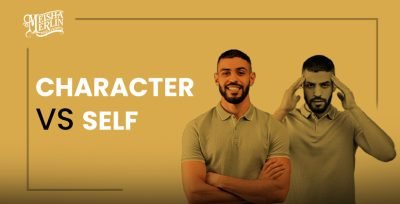
Character versus self conflict is an inner struggle that happens within the mind of a character because of conflicting emotions, values, beliefs, or identities within him or herself. It may be a hard moral dilemma, a struggle against self-doubt, regret about something done in the past, or an internal conflict regarding identity.
This form of conflict is often what makes the story emotionally compelling for the readers since it forces the character (and consequently, the reader) to grapple with ambiguity instead of reacting to the external stimuli.
Deciding whether to confess to something terrible, forgive someone who has hurt him or her, or change one’s views on a particular issue is a struggle against oneself no less than against others.
This form of conflict is often what makes the story emotionally compelling for readers since it forces the character—and consequently, the reader—to grapple with ambiguity instead of simply reacting to external events. Developing this kind of internal struggle also requires careful character development, particularly when the character’s motivations, fears, and decisions need to remain consistent throughout the story.
It may take years for a character to hold onto their unresolved guilt, but only a specific event will make them confront it. It is because of this reason, internal conflict becomes so much more effective when it’s directly related to the external situation at hand.
3. Character vs. Society

Character vs. Society conflict is where the main character is in opposition to society, which can be represented by laws, conventions, organizations, or ideologies with which the character disagrees, struggles, or is being oppressed.
It serves as a driving force behind dystopian literature, novels exploring social problems, and basically any work of fiction where the personal beliefs of the character clash with the world he or she inhabits.
The distinctive feature of this kind of conflict is the scope at which the protagonist stands against his or her opponent because instead of one antagonist, the story features a whole system, and therefore the role of individual antagonists (corrupt official, law enforcement officer, or fellow neighbor) is often played by those who represent it.
Conflicts between Character and Society usually prove most effective when it depicts the price paid both for conforming and not conforming. It will be difficult to create tension when defying the social system is problem-free.
When the social system is painted as completely worthless, it becomes a case of unbalanced conflict. The best conflict cases often complicate matters by revealing the reason behind the system, its beneficiaries, and its costs to the protagonist.
4. Character vs. Nature
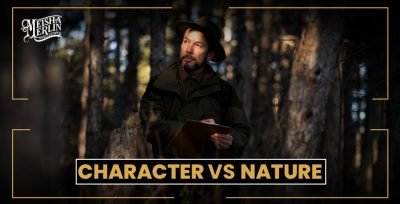
Character vs. Nature conflict occurs when a character is up against natural phenomena – whether the elements, the environment, animals, diseases, or terrain. Stories about survival, disasters, and adventures are essentially built on this form of conflict because nature provides an opponent that is neither logical nor persuadable.
It is one of the reasons why Character vs. Nature conflict works well in a story; nature lacks both a motive and morality, leaving the story to revolve around pure survival. The tension in the story arises from a character’s ingenuity, ability to endure and survive, and the difficult decisions he or she must make rather than negotiations or discussion.
Since nature cannot become a real character on its own, there has to be an additional component in the story that will help maintain the readers’ interest, whether it is a personal motivation for survival, a conflict in the relationships that are influenced by the struggle, or a problem that the character needs to solve to survive.
5. Character vs. Technology
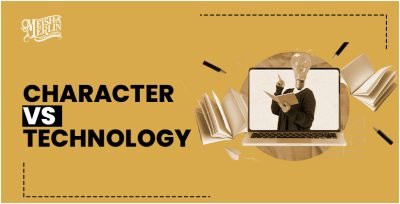
A conflict between Character and Technology features a character at odds with machines, AI, or some negative aspect of technological systems – whether it’s an uprising against the control of machinery, the unintended results of a scientific invention gone awry, or technology’s changing of humans in a way the character finds undesirable. It’s been cropping up more often now that science fiction has evolved into a popular form of literature.
The difference between a conflict involving Character and Technology and Character vs. Nature is intent, or the appearance of it. Technology is man-made; therefore, there’s always going to be a subtext of Character vs.
Character or Character vs. Society in a Character vs. Technology conflict – either the creator of something harmful, the company responsible for its misuse, or the society that has grown dependent on it. Even if it’s the rogue AI itself that the protagonist is facing, it represents human actions one step removed.
The kind of conflict that will be most effective in discussing current fears like surveillance, automation, lack of privacy, or loss of human connection is one that allows a tangible threat through which the writer can explore these themes. The best conflicts are the ones that connect the human element of the technological problem through a fear or decision made by a character.
6. Character vs. Fate or the Supernatural
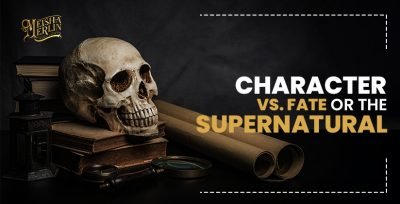
The Character versus Fate or the Supernatural is where the character is faced with powers that are not explainable via any natural or human laws but rather destiny, prophecy, curses, gods, or supernatural beings.
Such conflict is the foundation of classical tragedy, mythological stories, and many stories in the fantasy or horror genre because this opposing force follows its own rules, which cannot be controlled by the main character.
The conflict between a character and the forces beyond human understanding generates a certain question that becomes the basis for the drama: Is it possible for a person to change his destiny, or does the battle itself become the point no matter whether it results in success or failure? Stories which emphasize the unavoidable destiny of the main character (such as in classical tragedy) concentrate on the way the main character accepts destiny, while those who give the main character an opportunity to change his or her destiny concentrate on the price of such a deed.
The fact that supernatural and fate-based conflicts take place beyond normal logic makes it ideal for such conflicts to be set up through rules within the story about how the prophecy is phrased, the limitations of the curse, and what the supernatural force wants. Readers can accept any kind of premise as long as the internal logic within the story remains constant. The greatest problem is caused by inconsistency within the rules surrounding a supernatural conflict.
7. Character vs. the Unknown
In character vs. the unknown conflicts, there is a conflict between a character and something or an entity that can never really be described, comprehended, or even known.
These kinds of conflicts do not involve characters facing villains or monsters; instead, they may face unexplained cosmic forces that leave characters feeling lost in the face of an unknowable force. These conflicts differ in one important aspect from conflicts such as character vs. fate/supernatural; in the latter, the conflicts follow certain rules and internal logic, but not so in the former.
The conflict involving the unknown is at the heart of cosmic horror and existential literature, where what the protagonist is afraid of is not an entity that he/she must defeat, but the notion that the universe is indifferent or beyond comprehension to the human mind.
The very ambiguity of this conflict necessitates that it be tightly controlled since over-explanation defeats the purpose of this conflict, along with the fear and mystery associated with it, while insufficient explanation will leave the readers wondering if anything really happened at all. The best examples of the use of this conflict provide just enough detail to convey the magnitude of the problem faced by the character.
| Conflict Type | Category | What It Looks Like |
|---|---|---|
| Character vs. Character | External | Two people (or groups) with opposing goals |
| Character vs. Self | Internal | A struggle within one’s own mind, values, or fears |
| Character vs. Society | External | An individual against laws, norms, or institutions |
| Character vs. Nature | External | A struggle against weather, terrain, or the environment |
| Character vs. Technology | External | Conflict with machines, AI, or their consequences |
| Character vs. Fate or the Supernatural | External | A struggle against destiny, curses, or gods |
| Character vs. the Unknown | External | Facing something unexplainable or incomprehensible |
How to Use These Conflicts to Strengthen Your Story
Knowledge of conflict types becomes valuable only when you use them consciously in your writing. Two approaches play a key role in creating successful pieces of literature: using different conflict types and matching them to the right genre/story.
Combining Multiple Conflict Types
Most compelling stories do not focus on only one type of conflict without any other type of conflict. They rather combine two or even more kinds of conflict so that the story is based on different levels of action at the same time.
The most common and highly productive combination of types of conflict is one external conflict and one internal conflict. It means that along with facing some external challenge, such as the challenge posed by some other character or society, nature, and so forth, the protagonist faces his or her internal problems as well, such as his or her personal fears or weaknesses.
Most compelling stories do not focus on only one type of conflict. Instead, they combine two or more kinds of conflict so that the story develops on different levels at the same time.
When planning these elements, creating a clear story structure can help you determine which conflict should serve as the main storyline and which conflicts should remain secondary.
Matching Conflict to Genre
Certain genres make heavy use of specific kinds of conflict because these conflicts fulfill the expectations of their readers. For instance, thrillers and crime novels often focus on Character vs. Character conflicts, while literary novels may emphasize Character vs. Self.
Fantasy and myth frequently use Character vs. Fate or the Supernatural, while science fiction often explores Character vs. Technology. Understanding these conventions can be especially useful when developing a fiction writing project and deciding which conflicts best support the story’s genre and audience.
Self-conflicts where the character changes internally rather than acting outwards. Fantasies and myths use Character vs. Fate or the Supernatural type of conflict, while science fiction makes frequent use of the Character vs. Technology conflict.
It does not imply that a genre will contain only one kind of conflict, but rather that great genre literature will combine the expected conflict with another or others.
However, knowing what kind of conflict your genre audience expects in the story can help you decide how much weight to give to what aspect, and also show you where there is potential for experimentation with something new. Selecting a conflict contrary to what is expected in your genre can be quite effective – but only if done intentionally.
Once you have identified the major conflicts in your story, the next step is making sure they work effectively within the overall narrative. Professional book editing services can help authors refine character motivations, improve pacing, strengthen story structure, and identify areas where the conflict may need further development. On the other hand, knowledge about conflict types can be used to create it artificially in order to give an additional impulse to the development of the story that has already been written.
What to Do After Developing Your Story
Understanding conflict is an important part of developing a compelling story, but finishing the manuscript is only one part of the publishing process. Once your story has been written and revised, it needs to be prepared for publication.
Professional book proofreading can help identify remaining grammar, spelling, punctuation, and formatting errors. After proofreading, book formatting prepares the manuscript for its intended print or digital format.
Authors also need to decide how they want to bring their finished book to readers. Depending on their goals, they may choose self-publishing or work with a publishing company to prepare and release the book.
Once the book is ready, book marketing can help build awareness, reach the intended audience, and support the book’s launch.