



Quick Answer
There are seven fundamental steps to how to write a book, including selecting an idea, outlining your structure, creating a writing schedule, drafting, editing, getting beta reader feedback, and finally publishing. For new writers, completing a manuscript usually takes between 6 and 12 months, with a typical writing pace of 500–1,000 words per day.
What Does It Really Take to Write a Book?

Book writing requires an idea, a consistent pattern of writing, and a readiness to revise and rewrite until it’s ready to be seen by others. It is more a matter of routine rather than of natural talent, because most of those who have written a book are not the ones who could write it faster than anyone else but simply kept writing where others stopped.
Why Most People Quit Writing a Book
The most common reason a book isn’t completed is trying to combine writing and editing, which breaks the flow until the plot is fully revealed. Other possible causes include poorly drafted outlines, unrealistic daily word counts, and a lack of discipline instead of motivation.
Setting Realistic Expectations Before You Start
A typical first-time author needs:
| Book Length | Word Count | Estimated Time (at 500 words/day) |
|---|---|---|
| Novella | 20,000–50,000 words | 1–3 months |
| Novel | 70,000–100,000 words | 4–7 months |
| Non-fiction book | 40,000–70,000 words | 3–5 months |
These are drafting timelines only — editing typically adds another 2–4 months.
Step 1 – Find and Refine Your Book Idea

The good book idea answers one important question: what do readers receive in the end—whether that means solving a problem, resolving a plot, or changing their view of something? If you have a strong concept but need help turning your ideas into a complete manuscript, ghostwriting services can help bring the project from concept to finished book.
How to Choose the Topic or Genre That You Will Not Be Tired of
Choose the topic or genre that you will enjoy working with even after spending about 300 hours on the writing process (which is approximately how much time you will need to create a manuscript). The test is very simple: if you would enjoy reading five books on this topic or genre in general, then the idea is worth considering.
Testing Your Idea Before Outlining and Writing
Prior to spending several months on writing a manuscript, you may test your idea by creating a one-paragraph pitch and sharing it with 3–5 people who belong to the target audience. If you can not create an outline of at least three chapters without stopping somewhere, then the idea is to be developed further.
Step 2 – Outline Your Book Before You Write

Outlining a book involves creating an overview of the main elements of the story or argument prior to writing complete chapters, making it less likely to give up halfway through. Writers who outline ahead of time (“plotters”) complete their first drafts quicker than those who don’t plan out (“pantsers”), and yet both can result in completed books.
Popular Outlining Methods (Snowflake, Three-Act, etc.)
- Three-Act Structure: Setup, confrontation, resolution — the most popular structure for novels and films.
- Snowflake Method: Begin with a single-sentence description and then work your way up to a paragraph, page, and finally an outline.
- Chapter-by-Chapter Outline: A basic outline of the events in each chapter, well-suited for non-fiction and genre fiction.
How Detailed Should Your Outline Be?
Your outline needs to be specific enough to always know which scene or section follows but flexible enough to accommodate any changes while writing it. The majority of writers outline their books on a chapter-by-chapter basis using 2-4 bullet points per chapter.
Step 3 – Create a Writing Schedule That Works
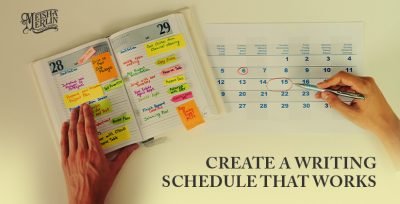
A writing schedule will work if it’s realistic enough that you can adhere to it on your worst week, not your best week. A consistent lower word count will take you farther than inconsistent high word counts because it’s momentum, not speed, that takes a manuscript to the finish line.
How Many Words Do You Need to Write a Day?
First-time writers tend to produce around 500-1,000 words per day and can thus complete their 90,000-word novel in 3 to 6 months. Established authors who are under a deadline tend to write anywhere between 1,500 to 2,500 words per day, but such high word counts are not necessary in a first manuscript.
Creating a Writing Routine That Works
Authors form a sustainable routine through writing at a set time every day, keeping track of their daily word count visually and seeing missed days as part of a regular process rather than giving up on the whole endeavor.
Step 4 – Write Your First Draft

The function of the first draft is to get your complete story or argument down on paper, not to prepare it for publishing. Most professional writers refer to their first drafts as “vomit drafts” or “zero drafts”: all that the zero draft needs to do is exist so that it can be improved upon.
Reasons Why Your First Draft Does Not Have to Be Perfect
The act of editing while writing reduces the speed of your output since it uses a different part of your brain (critical thinking) than the writing itself does (generative thinking). Keeping the two separate – writing now, editing later – is the most effective strategy to finish your first draft quickly.
How to Get Past Writer’s Block
Usually, writer’s block is a signal that you are having trouble determining the next steps, rather than a signal that you lack skills. Ways to push past writer’s block include lowering your target number of daily words, skipping ahead to something more exciting to write, or writing a placeholder line of text.
Step 5 – Edit and Revise Your Manuscript

Editing a manuscript involves several stages. Book editing services can address the manuscript at different levels, with structural editing coming first (does the story or argument make sense?), followed by line editing (does each sentence sound good?) and proofreading (is there a typo or error somewhere?).
Self-Editing Tips Before You Hire a Professional Editor
In preparation for hiring an editor, authors should try to self-edit their manuscripts by letting the manuscript rest for at least two weeks after completing the draft, reading it aloud to identify odd phrases, and deleting any scene that does not advance the story or argument. After the major revisions are complete, professional book proofreading can help identify remaining spelling, grammar, punctuation, and formatting errors.
When to Hire a Developmental Editor & Why
The job of a developmental editor is to assess the overall structure of the manuscript – its pace, plot/argument progression, and so forth – before fine-tuning individual lines. It is best to hire such an editor when you’ve completed a self-edited version of your draft, since professional editors are paid per word.
Step 6 – Get Feedback From Beta Readers

Beta readers are early readers who provide feedback on a finished piece of writing prior to its submission to an editor or publisher. They are supposed to spot areas where the author, being too familiar with their material, might not recognize potential problems with confusion, rhythm, or plot.
How to Get the Right Beta Readers
The best beta readers are people who usually read books of the same genre or subject matter because they can compare your book with similar books that other people read. Places where one can find beta readers include writing communities, genre-oriented Facebook groups, and beta reader matchmaking websites.
What Type of Feedback You Should Request from Your Beta Readers
When asking for feedback, be more specific about what you want to know rather than simply asking, “What do you think about my book?” Specific questions yield better results than vague general impressions.
Step 7 – Decide How to Publish Your Book

Writers can publish through traditional publishing, where the writer sells rights, and the publishing house handles much of the production and distribution, or through self-publishing, where the author has greater control over the process. Understanding these options can help you choose the right book publishing services for your goals.
Traditional Publishing vs. Self-Publishing
| Factor | Traditional Publishing | Self-Publishing |
|---|---|---|
| Time to publish | 1–2+ years | Weeks to months |
| Upfront cost to author | Low | Author-funded (editing, cover, formatting) |
| Royalty rate | Typically 7–25% | Typically 35–70% |
| Creative control | Shared with publisher | Full author control |
| Distribution | Wide, publisher-managed | Author-managed (Amazon KDP, IngramSpark, etc.) |
For authors who plan to make their book available through Amazon, Amazon book publishing can be part of the publishing strategy, particularly when reaching readers through Amazon’s extensive book marketplace.
Pros and Cons of Each Path
Self-publishing offers speed and greater creative control, but authors are generally responsible for services such as editing, cover design, formatting, distribution, and marketing. If you choose this route, self-publishing can give you greater control over how your book is produced and brought to readers.
Common Mistakes First-Time Authors Make
- Editing while drafting instead of finishing the draft first
- Skipping an outline and losing momentum midway through
- Setting an unrealistic daily word-count goal and quitting after missing it
- Publishing without professional editing or beta-reader feedback
- Comparing an unfinished first draft to other authors’ finished, edited books
Tools and Resources to Help You Write Faster
- Drafting: Scrivener, Google Docs, Microsoft Word
- Outlining: Notion, Milanote, index cards
- Grammar and line editing: Grammarly, ProWritingAid, Hemingway Editor
- Tracking progress: 4thewords, a simple spreadsheet, or a habit tracker app
Regardless of which publishing route you choose, publishing the book is only the beginning. Authors also need to build awareness and reach potential readers through book marketing, which can include promotional campaigns, media outreach, author branding, and other strategies.
Ready to Start Your Book?
Tell us about your project and our team will get back to you within one business day.
3 thoughts on “How to Write a Book: A Step-by-Step Guide for Beginners in 2026”