

Blog
How to Copyright a Book: A Step-by-Step Guide for Authors

Introduction
You spent months, maybe years, turning a blank page into a finished book. Before you send it out into the world, it deserves to be protected — and that starts with understanding how to copyright a book, step by step.
At Meisha Merlin Publishing, we’ve guided countless authors through exactly this stage — protecting their work, then preparing it for readers. This guide walks you through the process yourself, and if you’d rather have expert hands on it, our team is only a message away.
Completing the manuscript is one of those things that is worth protecting. If you are wondering how to copyright a book, it is important to know that copyright protection generally begins automatically when an original work is fixed in a tangible form, such as when you write it down or save the manuscript.
If you are still working on your manuscript, this guide on how to write a book can help you understand the process from developing an idea to completing the first draft.
However, the fact that you officially register your copyright will be the thing that will make it possible for you to defend yourself if you experience infringement of the content. Here is all the information you need to know about copyrights, whether it is worth the effort, and how to copyright a book.
To summarize: The fact that your book is automatically copyrighted the moment you write it does not mean much until you register it, which is an easy thing to do ($45 and completely online).
“Your book is your legacy. Copyright is how you protect it.”
— Meisha Merlin Publishing
What Does It Mean to Copyright a Book?

Copyright is a legal framework that provides exclusive rights to the original creative expression of the author. If we are speaking about a book, then only you will have the rights to reproduce it, distribute copies of the book, create any adaptations based on the book, as well as publicly perform it.
Basically, copyright is that legal mechanism which will prevent any third party from copying your manuscript, publishing it under their name, or selling it without your consent.
What Copyright Does and Doesn’t Protect
The copyright actually covers the way you express your ideas; it is not your ideas that are covered. So the way your story is told, the words you use, the characters you created, the dialogue you have created, and even the structure of your plot is copyrighted. The ideas, the facts, and the themes of your writing are not copyrighted by themselves.
That is why two books may be built around the same basic idea, but still there will not be any copyright infringement because ideas in themselves are not copyrighted. However, the way you expressed the idea through creating certain characters, specific scenes, dialogue, and certain plot structure might become copyrighted material.
What else you need to know about copyrights is that neither book titles, nor short phrases, nor the names of people or things are copyrighted since they are usually too short to constitute a copyright.
Do You Need to Register Your Copyright?

It all comes down to whether you are seeking the additional legal protections offered by the registration process in case your book is ever used without your consent, since some protections already exist without having to register.
“A story without protection is a story anyone can claim as their own.”
— Meisha Merlin Publishing
Automatic Copyright vs. Registered Copyright
In the USA (and most other countries of the world, thanks to a special international convention called the Berne Convention), copyright protection kicks in immediately upon fixation in a tangible medium, which means as soon as you put your work into writing or save the file, not when it is published. No filing process, no fees, and no copyright notices are required for this basic form of protection.
The registered copyright is the voluntary act of filing your work with the copyright office of your country, or the US Copyright Office in the USA.
Why Registration Still Matters
In cases where the work is not registered, one can usually sue only for actual damages, which require showing actual financial losses, making it very difficult and restrictive.
However, with the registration of a copyright, one becomes entitled to statutory damages, which may be up to $150,000 per work for willful infringement without having to prove any actual financial loss. In addition, the registration of the copyright may allow one to recoup attorneys’ fees, which can be critical in case of ever needing to go to court.
Therefore, to summarize, registration of copyright is like buying insurance. Most authors will not ever use it, but for a small one-time fee, it gives much stronger legal protection if needed in the future.
How to Copyright a Book: Step-by-Step
Copyright registration with the Copyright Office in the U.S. is an online procedure, which is conducted via an electronic system. The following is the entire registration procedure.
Step 1 — Go to the U.S. Copyright Office Website
You must first begin your search at copyright.gov, which is the official government site for the Copyright Office. You can theoretically apply using an offline form by mailing it in, but this method is far more expensive ($125 versus as little as $45 when done through the online method) and may take over a year.
Step 2 — Select “Literary Works”
From the list of registration categories, select the Literary Works category that includes books, manuscripts, and other written works rather than categories related to visual arts, music, or performance arts.
Step 3 — Create Your Copyright.gov Account
If you do not yet have one, you will have to create an account on the Copyright Office’s website. It is necessary for you to provide some basic information about yourself along with the creation of a username and password. You may choose a pseudonym for yourself while registering the material.
Step 4 — Start a New Registration
After logging in, select the alternative to register one work by one author, considering that you are the only author of the book and the holder of the copyright of the same. The process is eligible for the reduced online filing fee, not the regular fee.
Step 5 — Fill Out Your Book’s Details
You will be guided through several forms requesting that you provide information pertaining to your book, such as the name of the book, whether the book is published, author information, and the like. Take your time, as accuracy is important for the documentation you are doing.
Step 6 — Pay the Registration Fee
Once you’ve submitted your application, you will be prompted to make payment on a separate webpage for your filing fees via credit/debit card or direct deposit. The filing fees are revised from time to time by the Copyright Office, but you may want to check how much it is on their website, which has always remained one of the least expensive ways.
Step 7 — Submit a Copy of Your Book
After the payment is made, you will be required to send your work through the copyright office for the record. If you have more than one form of that work, then you would want to send the best quality work available. It could be that you choose to send your hard cover work rather than your paperback, for instance.
How Much Does It Cost to Copyright a Book?
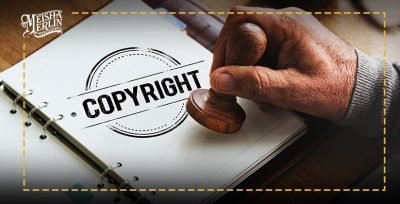
Obtaining copyright registration of a book using the website of the United States Copyright Office is one of the cheapest ways of protecting a piece of literary work, with the registration fee starting at about $45 for a single work registered by an individual author.
Registering a copyright work on paper can be done at a significantly higher cost, with the fees charged being approximately $125; additionally, registering via this method takes much more time, making online registration a much better choice for virtually all indie and self-publishing writers.
Copyright is only one part of the process of bringing a manuscript from an idea to a finished publication. If you are working through the complete process, this guide explains how to make a book, from developing the manuscript through publishing and promotion.
Before registering or publishing your manuscript, authors may go through several rounds of revision to make sure the work is complete. Book editing can help improve the manuscript’s structure, clarity, consistency, and overall quality before it moves into the final publishing stages.
Should You Copyright Your Book Before or After Publishing?

If you are preparing the manuscript for publication, the final production process may also include book formatting for the print or digital edition, depending on how you plan to distribute the book. The Copyright Office will accept your work either in its unpublished form or its published form, and your automatic copyright is valid from the moment you draft the manuscript, irrespective of the timing of the registration.
It does make a difference in terms of your protection. If you have registered your copyright prior to any infringement taking place, or within the first three months of your book being published, it ensures your eligibility for statutory damages and attorneys’ fees if such infringement takes place in the early days of its publication – something many authors who publish through Amazon KDP and other self-publishing channels worry about when considering registering before publishing their book.
Once the substantive editing is complete, book proofreading can provide a final review for spelling, punctuation, grammar, and other remaining errors. Completing these final checks can help ensure that the version you publish or register accurately represents the finished manuscript.
Copyright Registration Outside the U.S.

However, the copyright itself, as a right, is recognized internationally in practically every nation by means of the Berne Convention, an international agreement which provides for automatic copyright upon creation of a piece of work, not needing any registration, in over 180 member nations.
But as far as the registration process is concerned, there are considerable differences between one country and another. The case in point is the United Kingdom, where there is no copyright registration system at all; everything is automatic, and the closest you can get is to submit a copy of your book to the Legal Deposit Office of the British Library shortly after publication. This is more about setting a date than anything else.
“Write boldly, protect wisely — that’s how authors build something lasting.”
— Meisha Merlin Publishing
Protecting your book is easier with the right team
From registering your copyright to editing, formatting, and publishing — Meisha Merlin Publishing can guide you through every step.
One thought on “How to Copyright a Book: A Step-by-Step Guide for Authors”